


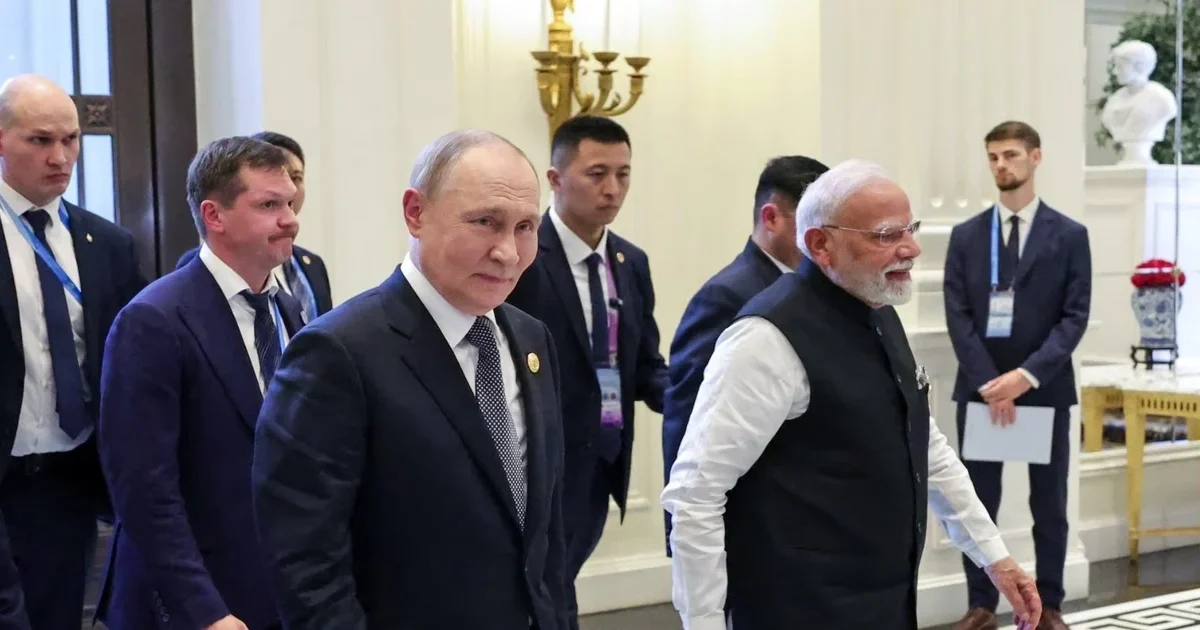
On December 4, 2025, Russian President Vladimir Putin came to New Delhi to meet Prime Minister Narendra Modi for the 23rd India–Russia Annual Summit. This visit feels different. This is Putin’s first trip to India in years, and anyone can feel that, both sides want to bring back some of the old warmth.
The big shift this time? The spotlight’s moved. Defence deals are still on the table, but everyone’s talking about education, jobs, trade, and culture. Both countries are looking forward, not back.
Here’s What Stood Out
1. Trade & Economic Partnerships Are Expanding
Modi and Putin aren’t just making speeches—they’re working to boost trade, especially in agriculture, dairy, fisheries, food processing, and energy. Russia’s hungry for more Indian farm and dairy products, which is great news for Indian farmers and small businesses.
They’re not just planning for immediate agreements, both countries were planning long-term corporation, but also the long run too. They are putting together a 2030 Strategic Economic Roadmap, which means teaming up on tech, energy, manufacturing, and exploring new markets together.
2. More Jobs, Thanks to Easier Movement
The headline this year? A labour-mobility agreement. This deal lets more skilled and semi-skilled Indians work in Russia, from construction and healthcare to hospitality and infrastructure.
Russia needs workers, and Indian professionals are ready to go. It’s a win-win: more jobs for Indians, and a safer, more organized way to work abroad.
3. Education and Culture Step Up
Education’s getting a real push. Both governments were introducing new students exchange program, university partnerships, joint research in science and tech, plus more media and cultural projects.
It’s not just paperwork—these programs open real doors for students, spark new research, and get people connecting one-on-one.
4. Defence Ties Are Still Strong, But There’s More to the Story
Defence cooperation isn’t going anywhere. They’re still talking joint production, tech transfers, and big projects like missiles and aircraft. But now, the focus is spreading out. Defence is still a pillar, but civilian partnerships are getting more attention than ever.
Why It Matters for India
More Doors Open for Students
Indian students can get better opportunities towards easier access to Russian universities, more scholarships, and better chances to join research teams—especially in medicine, engineering, and tech.
Better Job Opportunities
The new labour deal means more jobs abroad for Indian workers and a little less pressure on the job market at home. Professionals get a shot at global experience.
A Boost for Exporters
Russia wants more Indian food, dairy, medicines, and processed products. That’s a clear win for Indian exporters.
India’s Place on the World Stage
Even with global uncertainty, India’s strategy is simple: build strong international ties but keep its own interests front and center.
What’s Next
The 2025 Modi–Putin summit shows just how rapidly the India–Russia diplomatic bilateral relationship is evolving. Defence is still the priority, but education, jobs, culture, agriculture, technology, and better economic plans are far more important for new era.
New deals are coming, and both countries are confirming that the benefits should reach people who are in actual need of it. For students, business owners, professionals, and exporters, this isn’t just another summit. It’s a major rise ahead, packed with new opportunities. That’s why these 2025 talks matter—they mark a turning point for both India and Russia.