


When it comes to learning and opportunities, the debate on reservation in India has always been tangled. It spins around striking a balance between social justice and meritocracy. Recently, the Bombay High Court crushed the 3% reservation given to the children of government and private employees, rekindling discussions on who really deserves affirmative action.
⚖️ The Court’s Stand
The High Court made it clear that privilege cannot be disguised as protection. Reservation, by its very nature, is intended to uplift the socially and educationally disadvantaged sections of society. Granting a separate quota to children of employees—already in relatively secure positions—was seen as a move that diluted the true purpose of reservation.
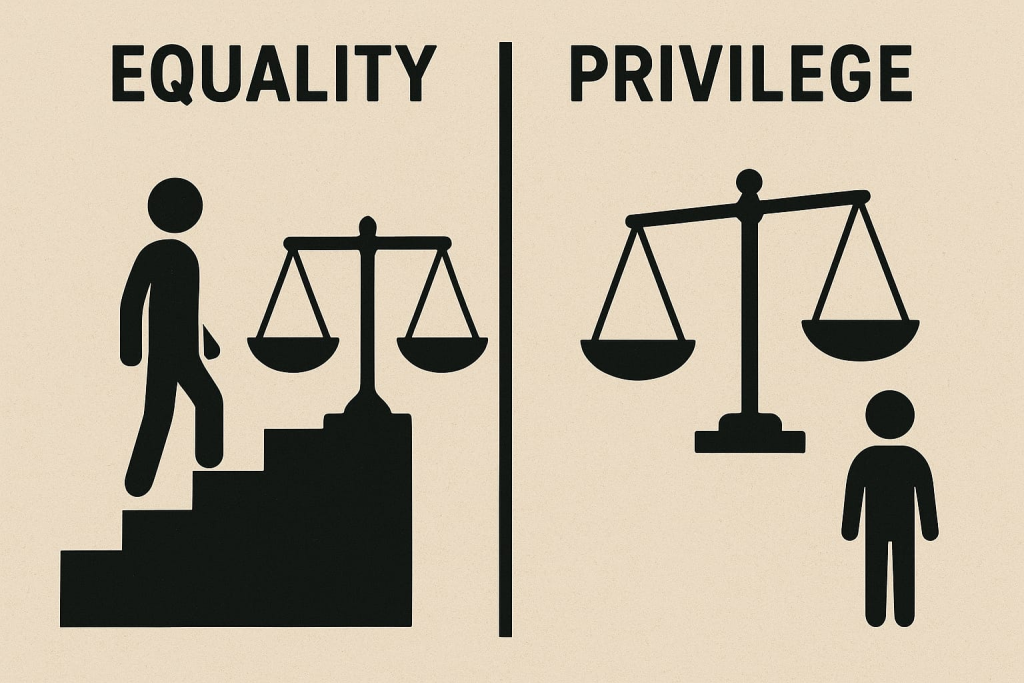
🌍 Equality vs. Privilege
✅ Equality ensures that every child, irrespective of their background, contends on a level playing field.
❌ Privilege-based reservation, on the other hand, gives steep benefit to those who are already well positioned socially and economically.
By quashing down this quota, the Court upheld that education should not be regarded as an hereditary privilege but as a right earned on merit and genuine need.
🎓 Why This Matters
1. Restores Fair Competition – Students outside the privileged circle will now have better chances based on merit.
2. Protects True Beneficiaries – Reservation remains intact for those who genuinely need upliftment, not those with existing institutional advantages.
3. Sets a Legal Precedent – It reinforces the constitutional principle that reservations must be based on need and disadvantage, not convenience or employment category.
🔍 The Larger Debate
This verdict also raises broader questions:
1.Should reservations be extended beyond caste, community, and socio-economic backwardness?
2.Are we, at times, confusing benefits of employment with rights of social justice?
3.How do we balance the aspiration for inclusivity with the principle of meritocracy?
🌟 A Step Towards Justice
The Bombay HC’s judgement is not just about quashing a 3% quota. It’s a symbolic reconfirmation that education is a space where equality must triumph over hereditary privilege. In a nation attempting for fairness, such decisions remind us that the spirit of reservation is empowerment, not entitlement.
✨ Final Thought:
True progress lies in empowering the marginalized and disadvantaged, not in extending specific treatment to the already privileged. The Bombay High Court’s decision is a step forward in ensuring that justice in education remains rooted with equality, not privilege.