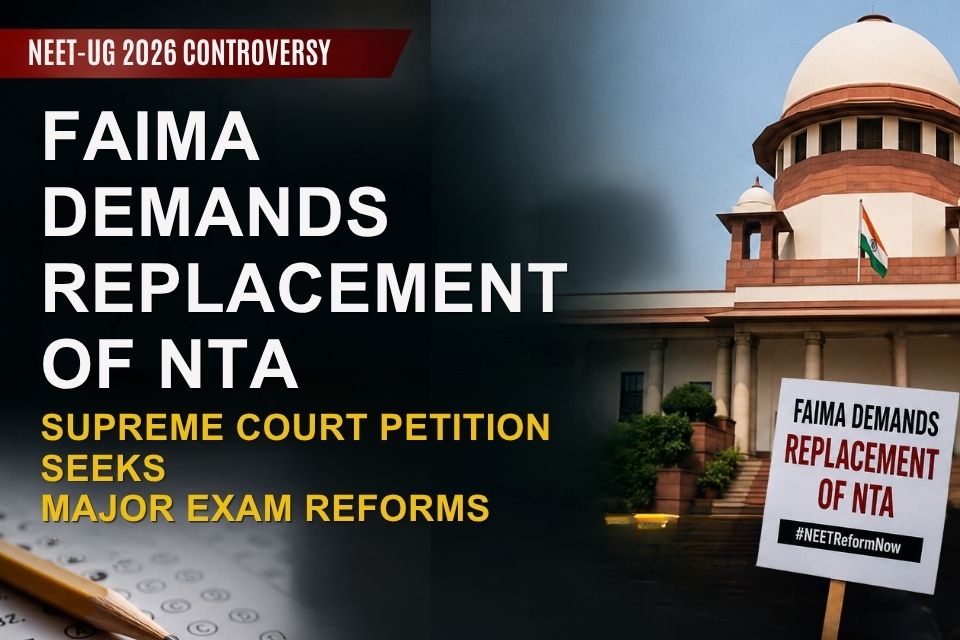
The controversy surrounding NEET-UG 2026 has taken a major turn after the Federation of All India Medical Associations (FAIMA) approached the Supreme Court demanding the replacement or complete restructuring of the National Testing Agency (NTA).
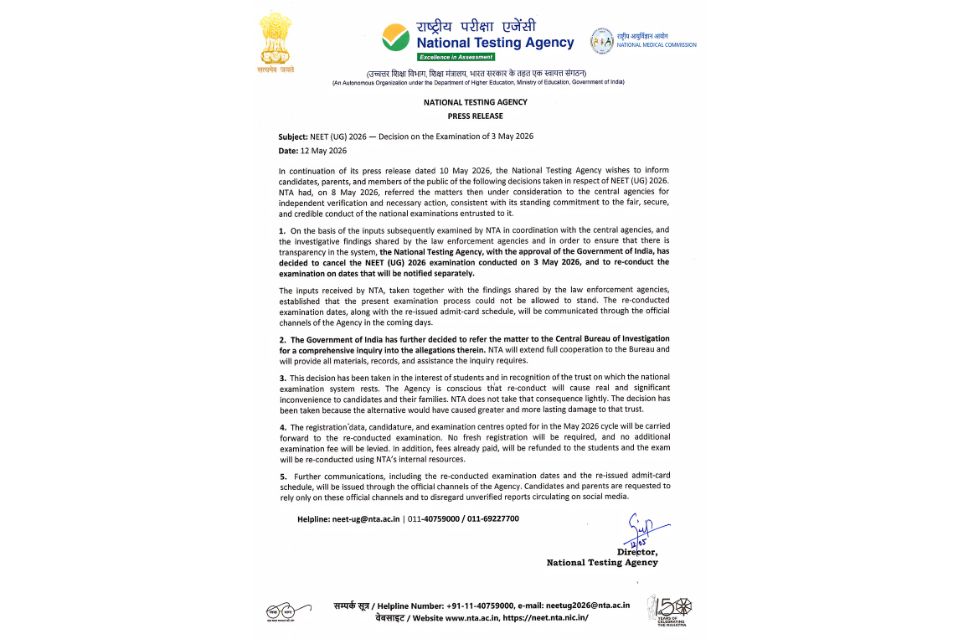
The move comes after the official cancellation of NEET-UG 2026 following allegations of a widespread paper leak, triggering nationwide concern among medical aspirants, parents, and healthcare organizations.
With more than 22 lakh students affected, the issue has become one of the biggest examination controversies in recent years.
Why FAIMA Moved to the Supreme Court
FAIMA filed a petition seeking urgent reforms in the medical entrance examination system after repeated allegations of examination leaks and security failures.
According to reports, the organization questioned the credibility and transparency of the current examination mechanism and demanded stricter oversight for future NEET examinations.
The association emphasized that the future of medical education cannot be compromised due to alleged exam mafias, paper leak networks, and administrative lapses.
Major Demands Made by FAIMA
1. Replacement or Restructuring of NTA
One of the biggest demands raised by FAIMA is the replacement or complete overhaul of the National Testing Agency.
The organization reportedly stated that repeated controversies have damaged public trust in the examination body and that a more secure, transparent, and autonomous authority should be established for conducting national-level medical entrance examinations.
2. Formation of a High-Powered Monitoring Committee
FAIMA has also demanded the formation of a special monitoring committee to supervise the re-examination process.
The proposed committee would reportedly include:
A retired Supreme Court judge
Cybersecurity experts
Forensic specialists
Senior education administrators
The purpose of the committee would be to ensure fairness, transparency, and strict security during the conduct of the re-exam.
3. NEET Re-Exam Under Judicial Supervision
Another major demand is that the fresh NEET-UG examination should be conducted under judicial monitoring.
FAIMA believes that direct supervision by an independent authority can help restore confidence among students and parents after the cancellation controversy.
4. Shift from Offline Exam to Computer-Based Test (CBT)
The doctors’ association also proposed transitioning NEET from the traditional pen-and-paper format to a Computer-Based Test (CBT) system.
According to the petition:
CBT mode can reduce risks of paper leaks during transportation and storage.
Digital examination systems can improve monitoring and encryption.
Technology-driven examinations may provide better transparency and security.
This suggestion has already started a nationwide debate among students and education experts.
5. Stronger Digital Security Measures
FAIMA further demanded stricter technological safeguards, including:
Digitally locked question papers
Advanced encryption systems
Real-time monitoring mechanisms
Improved biometric verification
Enhanced cybersecurity infrastructure
The organization argued that existing security measures failed to prevent alleged malpractice despite surveillance systems already being in place.
6. Centre-Wise Result Transparency
To improve transparency, FAIMA also requested the publication of centre-wise examination results.
The association believes this step can help authorities identify suspicious patterns, irregularities, and unusually high score clusters more effectively.
7. CBI Status Report on Investigation
FAIMA has reportedly requested that the Central Bureau of Investigation (CBI) submit a detailed status report regarding:
Arrests made in the paper leak case
Investigation progress
Identification of involved networks
Actions taken against accused individuals
The report is expected to provide clarity on the scale of the alleged leak operation.
What Triggered the NEET-UG 2026 Crisis?
The controversy intensified after reports emerged claiming that leaked “guess papers” allegedly matched several actual exam questions.
Following investigations and multiple reports from different states, authorities reportedly initiated action against suspected individuals connected to the leak network.
Several detentions and arrests were reported from states including:
Bihar
Rajasthan
Maharashtra
Haryana
Kerala
The issue eventually led to the official cancellation of NEET-UG 2026, creating uncertainty for lakhs of aspirants across the country.
Medical Fraternity Expresses Concern
Multiple doctors’ organizations and resident doctor associations expressed concern over the growing examination crisis.
The medical community highlighted several issues, including:
Mental stress faced by students
Loss of trust in national examinations
Delays in medical admissions
Influence of alleged exam mafias
Some medical groups also demanded wider reforms in the medical education system and stricter accountability from examination authorities.
Current Status of NEET-UG 2026
As of now:
NEET-UG 2026 stands officially cancelled.
Fresh examination dates are expected to be announced soon.
The Supreme Court is yet to hear FAIMA’s petition.
The CBI investigation into the alleged paper leak network is ongoing.
Students are now waiting for official updates regarding the revised examination schedule and the future course of action by authorities.
Conclusion
The NEET-UG 2026 controversy has sparked one of the largest debates on examination security and transparency in India’s medical education system.
FAIMA’s demand for the replacement of NTA, judicial monitoring, CBT-based examinations, and stronger digital safeguards reflects growing concerns over the credibility of national-level entrance exams.
As investigations continue and the Supreme Court reviews the matter, millions of students and parents across the country are closely watching the developments that could shape the future of NEET examinations in India.