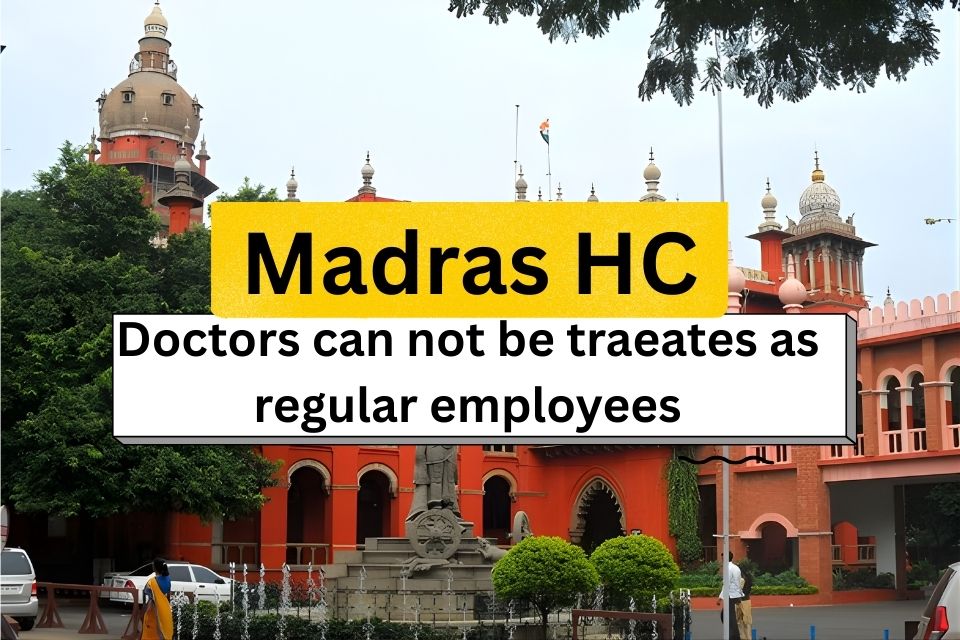
A ruling out of nowhere reshapes how clinics must see their staff - the Madras High Court said physicians aren’t factory workers shaped by assembly-line rules. Instead of lining up like hourly laborer's, doctors hold a distinct role that resists flat categorization under standard employment terms. When one private facility in Chennai pushed to treat them otherwise, judges shut it down sharply. Not only was the claim dismissed, but the institution had to pay ₹1 lakh because fighting for such an argument wasted judicial time.
Background Of the Dispute
A dispute started when MIOT Hospitals Private Limited asked for arbitration, aiming to apply tight work rules on a top heart and chest surgeon after he left and joined a different medical center. His move triggered claims he broke parts of his contract. What followed was legal argument over whether those job conditions could be enforced.
High Court Notes on Major Points
A sharp criticism came from Justice N. Anand Venkatesh, who oversaw the case, targeting the hospital's position
A courtroom pointed out how physicians stand apart from assembly line workers or office staff. Not tied to strict procedures, they rely on personal insight when treating patients. Their role leans more on self-directed choices than following set rules. Medical decisions come from individual expertise, not corporate guidelines. This independence shapes how care gets delivered. Professional freedom matters in their day-to-day work. Rulings like these underline a key distinction in job nature
A hospital runs because of physicians. It said this clearly - “Medics might work beyond clinic walls, but clinics cannot stand without medics” - showing how vital skilled care is when treating people.
When it comes to doctors working freely, courts have drawn a line. Clauses trying to block their practice, often copied from business contracts, clash with public interest. Such limits run against Sections 23 and 27 of the Indian Contract Act, 1872. These rules do not allow binding someone from earning through their skill. Since restrictions on medical professional’s act like professional handcuffs, they fall apart in law.
Outcome and Implications
A court told the hospital to hand over ₹1 lakh to the doctor after tossing out its appeal, showing clear annoyance at efforts to box doctors into rigid job labels.
One day soon, courts might look at hospital deals differently. Not every specialist may sign strict stay-away promises anymore. Contracts drawn up behind clinic doors could change shape without warning. Relationships between doctors and management tend to shift when rules bend slightly. A recent call by legal minds hints at quiet tremors ahead. Private care settings won’t operate exactly as before. Words once buried in fine print now spark debate. How clinics bind staff feels less certain than it did last year. The ruling didn’t shout - but its echo travels far
Healthcare Sector Implications
This decision makes clear what was already true
- A single doctor's independence stands apart - unlike workers on an assembly line. Their role breathes differently from typical office routines.
- A rule limiting where a physician can work might not hold up in court. Sometimes, agreements go too far restricting medical practice locations.
- Medical work carries its own demands, so hospital contracts ought to reflect that reality while meeting broader societal rules.
Watching this move are lawyers and doctors across India, each waiting to see how job ties in health care might shift because of one ruling. Boundaries could change now that a verdict draws new lines around who owes what at work.