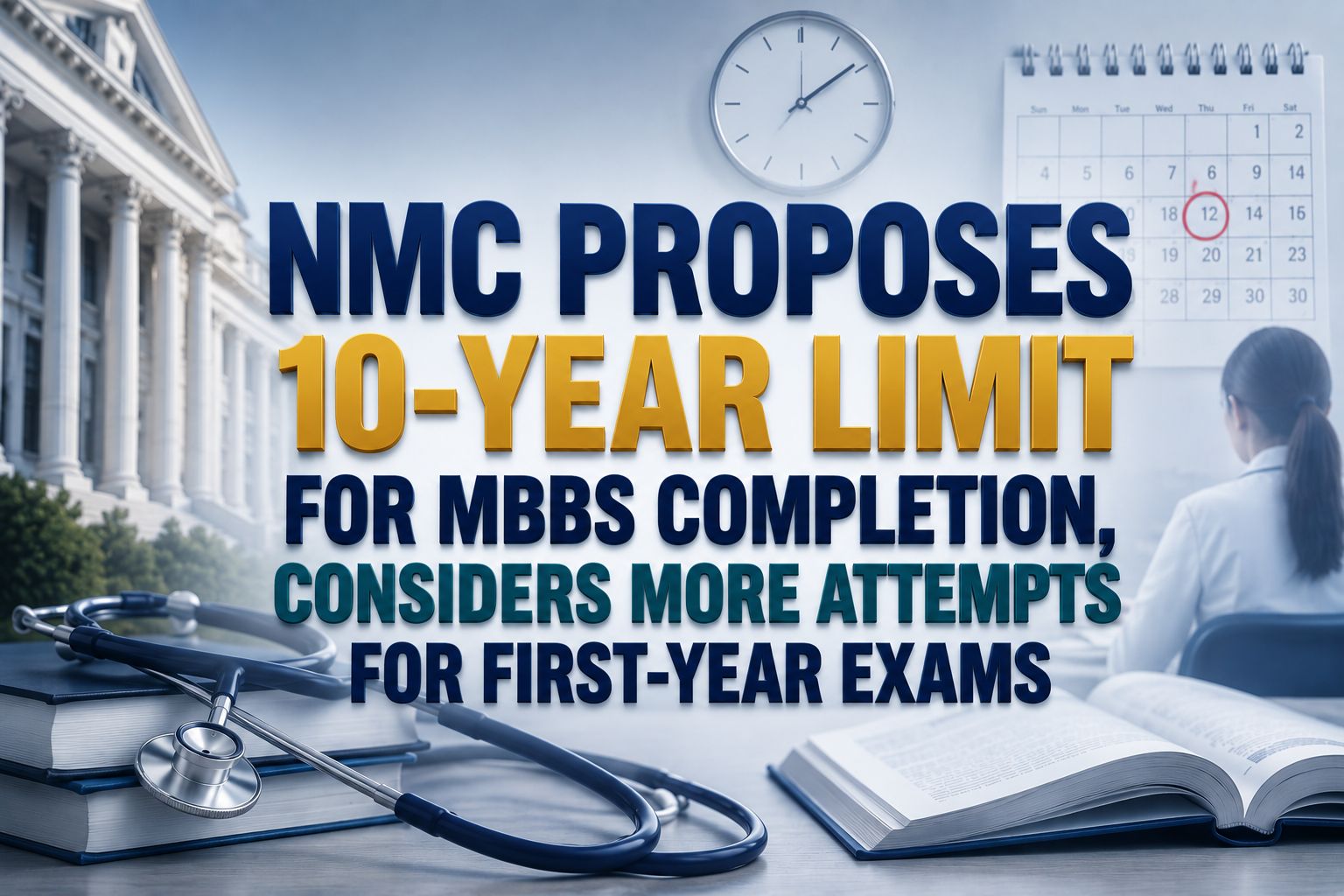
New Delhi: In a significant move aimed at balancing academic standards with student welfare, the National Medical Commission (NMC) is considering a proposal that would allow MBBS students up to 10 years to complete their medical degree. The recommendation comes from the Parliamentary Standing Committee on Health and Family Welfare, which has also suggested increasing the number of attempts permitted for the
First Professional MBBS Examination.
The proposal seeks to provide greater flexibility to medical students while ensuring that professional competency and educational quality are maintained throughout the course duration.
Proposed Changes to MBBS Regulations
According to the recommendations, MBBS students may be given a maximum period of 10 years from the date of admission to successfully complete their undergraduate medical education. This would be an extension from the current provisions under the Graduate Medical Education Regulations (GMER), which prescribe a shorter completion timeline.
In addition, the committee has recommended increasing the number of permissible attempts for the First Professional MBBS Examination from four to six attempts. The first professional examination includes core subjects such as Anatomy, Physiology, and Biochemistry, which are often considered among the most challenging phases of medical education.
Relief for Students Facing Academic Challenges
The committee observed that many students struggle during the initial phase of medical training due to the rigorous academic curriculum and the transition from school-level education to professional medical studies.
By allowing additional examination attempts, the proposal aims to reduce the number of students who are forced to discontinue their medical education because of early academic setbacks. The committee emphasized that deserving students should be provided with adequate opportunities to overcome initial difficulties and continue pursuing their medical careers.
Balancing Flexibility with Academic Standards
While the proposal offers greater flexibility, it also maintains a clear upper limit by requiring students to complete the MBBS program within the stipulated 10-year period. Policymakers believe this approach can help maintain educational standards while preventing indefinite extensions of medical courses.
Experts suggest that such measures could improve student retention rates and reduce the emotional and financial burden faced by students who encounter difficulties during their early years of medical education.
What It Means for MBBS Aspirants
If the recommendations are adopted by the NMC, future MBBS students could benefit from:
Up to six attempts to clear the First Professional MBBS Examination.
A maximum of 10 years to complete the MBBS course.
Greater flexibility in managing academic setbacks.
Reduced risk of discontinuation due to failure in early professional examinations.
Proposal Yet to Receive Final Approval
It is important to note that the recommendations are currently under consideration and have not yet been formally implemented. Any changes will come into effect only after approval and official notification by the National Medical Commission.
Medical students, aspirants, and educational institutions are closely monitoring the developments, as the proposed reforms could have a significant impact on the structure and progression of undergraduate medical education in India.
Conclusion
The proposed changes reflect a growing emphasis on student welfare within medical education while preserving the standards expected of future healthcare professionals. By offering additional examination attempts and extending the course completion window, the NMC may provide a more supportive academic environment for aspiring doctors without compromising the quality of medical training.