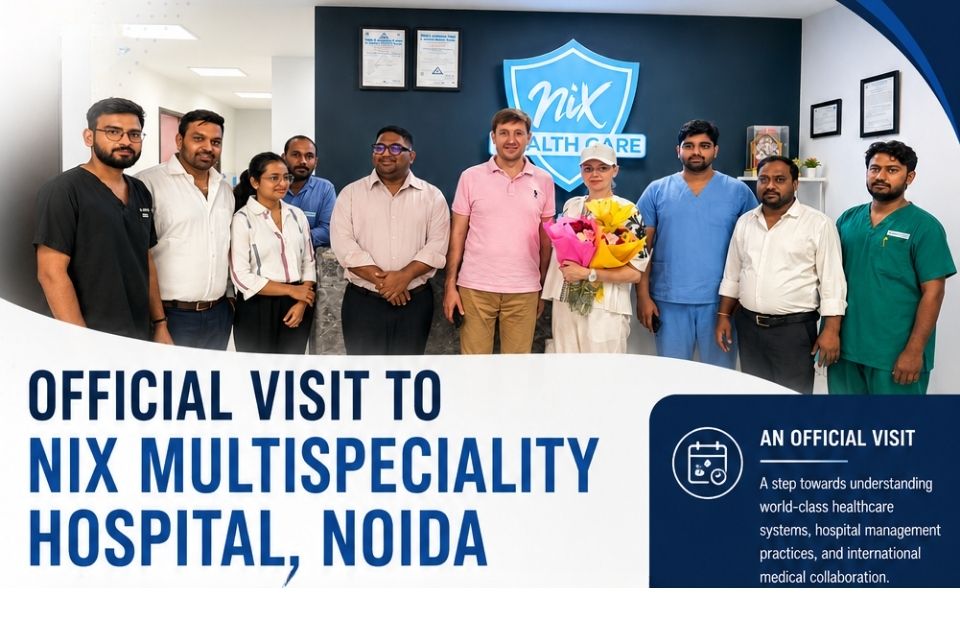
As part of an official institutional visit, our team had the privilege of visiting Nix Multispeciality Hospital, Noida, a rapidly growing healthcare institution recognized for its advanced medical infrastructure, modern patient care facilities, and efficient hospital management systems.
The visit was personally hosted by Dr. Nikesh Ranjan, who provided a comprehensive tour of the hospital and offered valuable insights into the operational, administrative, and clinical aspects of running a modern multispeciality healthcare facility.
The visit served as an excellent opportunity to understand how hospitals function beyond clinical care, including the coordination between departments, healthcare management practices, and the role of internationally trained medical professionals in strengthening India's healthcare ecosystem.
Key Highlights of the Visit
The delegation gained insights into:
✔ Hospital Administration & Management Systems
✔ Operation Theatre Workflow and Surgical Coordination
✔ Patient Care and Support Services
✔ Healthcare Technology and Medical Infrastructure
✔ Role of Russian Medical Graduates in Indian Healthcare
✔ Comparison of Healthcare Facilities in Russia and India
✔ Leadership and Vision Behind Nix Healthcare
A Guided Tour by Dr. Nikesh Ranjan
One of the most valuable aspects of the visit was the detailed hospital walkthrough conducted by Dr. Nikesh Ranjan. From patient reception areas to critical care units, every department was introduced with a clear explanation of its role within the healthcare system.
The team observed how various units work together to deliver seamless patient care while maintaining high standards of efficiency and safety.
Departments and Facilities Explored
Emergency Care Unit
Intensive Care Unit (ICU)
Operation Theatres (OT)
Diagnostic and Imaging Departments
Inpatient Wards
Outpatient Departments (OPD)
Administrative and Management Offices
Patient Support Services
The visit provided a practical understanding of how healthcare institutions combine medical expertise, technology, and management strategies to ensure optimal patient outcomes.
Russian Medical Graduates Contributing to India's Healthcare Sector
A particularly inspiring aspect of the visit was interacting with healthcare professionals who completed their medical education in Russia and are now successfully serving patients in India.
These graduates shared their experiences regarding:
Key Learnings from Russian Medical Education
Strong emphasis on clinical exposure
International medical curriculum
Early patient interaction and practical training
Exposure to modern healthcare technologies
Multicultural learning environment
The discussions demonstrated how graduates from Russian universities are effectively applying their knowledge and clinical skills within Indian healthcare institutions.
Notable Observations
Several Russian-trained doctors are actively involved in patient care.
International medical graduates are contributing to healthcare delivery and hospital operations.
Their experiences showcase the growing global recognition of Russian medical education.
This served as a powerful example of how global medical education can contribute to strengthening healthcare services in India.
Understanding How Hospital Operations and Management Work
While healthcare is often associated only with doctors and treatments, the visit highlighted the importance of hospital management and operational coordination.
The team gained insights into how hospitals manage:
Core Operational Areas
Patient Management
Registration processes
Appointment scheduling
Medical record management
Patient follow-up systems
Clinical Operations
Treatment planning
Department coordination
Surgical scheduling
Emergency response management
Administrative Functions
Resource allocation
Staff coordination
Quality assurance
Regulatory compliance
Technology Integration
Digital patient records
Diagnostic systems
Healthcare monitoring tools
Communication networks
The visit emphasized that successful healthcare delivery depends on a combination of clinical excellence, efficient management, and technological support.
Exploring Surgical Operations and Clinical Workflow
A key learning experience during the visit was understanding how surgeries and critical medical procedures are managed within a hospital environment.
The delegation observed how various teams collaborate before, during, and after surgical procedures.
Surgical Workflow Overview
Patient Evaluation and Diagnosis
Pre-operative Planning
Operation Theatre Preparation
Surgical Procedure Execution
Post-operative Monitoring
Recovery and Follow-up Care
This process highlighted the importance of teamwork among:
Surgeons
Physicians
Nursing Staff
Technicians
Administrative Teams
Patient Care Coordinators
The experience reinforced the significance of precision, communication, and coordination in delivering successful healthcare outcomes.
Comparing Healthcare Facilities: Russia and India
An important discussion during the visit focused on understanding the similarities and differences between healthcare systems in Russia and India.
Areas of Comparison
| Healthcare Aspect | Key Discussion Points |
|---|---|
| Infrastructure | Modern hospital facilities and patient care environments |
| Medical Technology | Diagnostic and treatment equipment |
| Clinical Training | Exposure and practical learning methods |
| Patient Care Models | Service delivery and patient support |
| Hospital Management | Administrative efficiency and coordination |
| Emergency Services | Critical care and rapid response systems |
The discussions revealed that both countries have made significant progress in healthcare modernization, with increasing emphasis on technology-driven patient care and operational efficiency.
Leadership Driving Healthcare Innovation
Throughout the visit, Dr. Nikesh Ranjan shared valuable perspectives on healthcare leadership, innovation, and the importance of continuously improving patient services.
His vision focuses on:
Strategic Healthcare Priorities
✔ Delivering quality patient care
✔ Adopting advanced medical technologies
✔ Building efficient healthcare systems
✔ Encouraging professional development
✔ Strengthening healthcare accessibility
The interaction provided participants with a broader understanding of how visionary leadership contributes to the growth and success of modern healthcare institutions.
Key Takeaways from the Visit
What Made This Visit Valuable?
⭐ Practical exposure to hospital operations
⭐ Understanding modern healthcare management
⭐ Interaction with Russian medical graduates working in India
⭐ Insights into surgical and clinical workflows
⭐ Comparison of healthcare systems in Russia and India
⭐ Learning from experienced healthcare professionals
⭐ Exposure to advanced medical infrastructure and patient care systems
Conclusion
The official visit to Nix Multispeciality Hospital, Noida, proved to be an enriching and educational experience that provided valuable insights into hospital administration, healthcare management, surgical operations, and patient care systems.
The visit also highlighted the successful contribution of Russian medical graduates within India's healthcare sector and showcased how international medical education is helping shape the future of healthcare delivery.
With the guidance of Dr. Nikesh Ranjan, participants gained a comprehensive understanding of how modern healthcare institutions successfully integrate clinical expertise, advanced technology, and effective management practices to provide quality medical care.
Such initiatives continue to strengthen academic-industry collaboration while fostering greater understanding between global medical education systems and healthcare institutions.