
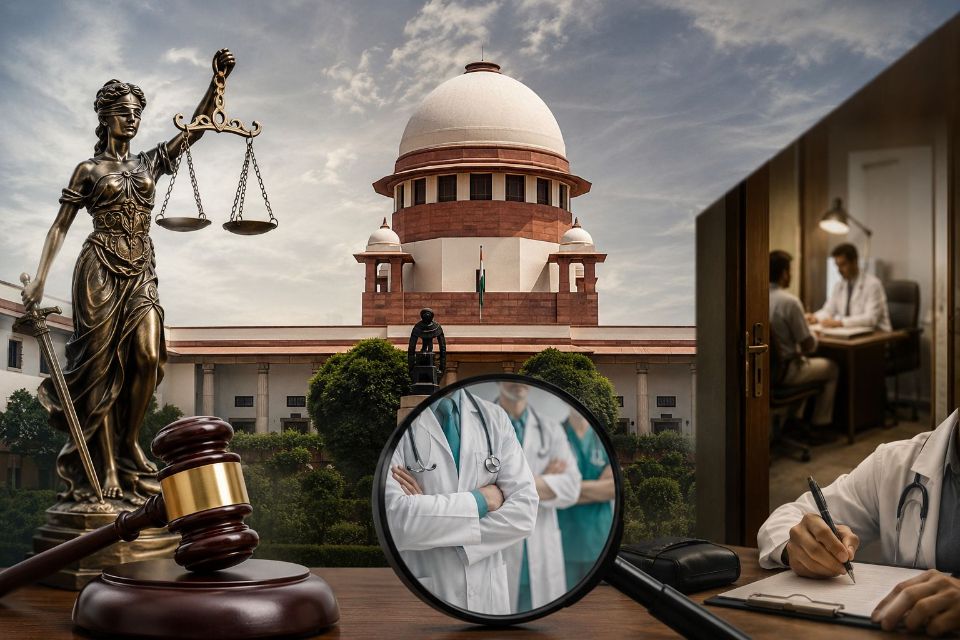
In a significant observation concerning medical ethics and public healthcare accountability, the Supreme Court has declined to interfere with an ongoing inquiry related to MLN Medical College. While hearing the matter, the Court reiterated that government doctors are expected to devote their professional services to public institutions and should not engage in unauthorized private practice.
The case revolves around allegations concerning the conduct of certain government-employed medical professionals. The Supreme Court refused to halt the inquiry process, emphasizing that investigations must be allowed to proceed in accordance with established legal and administrative procedures. The Court observed that public healthcare institutions are established to serve citizens efficiently, and government doctors hold a responsibility to prioritize their duties within the public healthcare system.
The issue of private practice by government doctors has long been a subject of debate in India. Supporters of restrictions argue that unauthorized private practice can affect patient care in government hospitals, reduce accountability, and compromise the availability of medical services for economically weaker sections of society. On the other hand, some medical professionals contend that broader systemic reforms are needed to address concerns related to workload, infrastructure, and compensation.
The Supreme Court's decision to allow the inquiry to continue highlights the importance of transparency, accountability, and adherence to service rules within the healthcare sector. By refusing to intervene at this stage, the Court has reinforced the principle that allegations involving public servants must be examined through proper investigative mechanisms before any conclusions are drawn.
The development is being closely watched by the medical community, healthcare administrators, and policymakers, as it may influence future discussions regarding government service obligations and professional conduct in the healthcare sector.
As India's healthcare system continues to evolve, maintaining public trust through ethical practices and institutional accountability remains a key priority. The outcome of the inquiry could contribute to broader conversations on balancing professional autonomy with public service responsibilities in the medical profession.