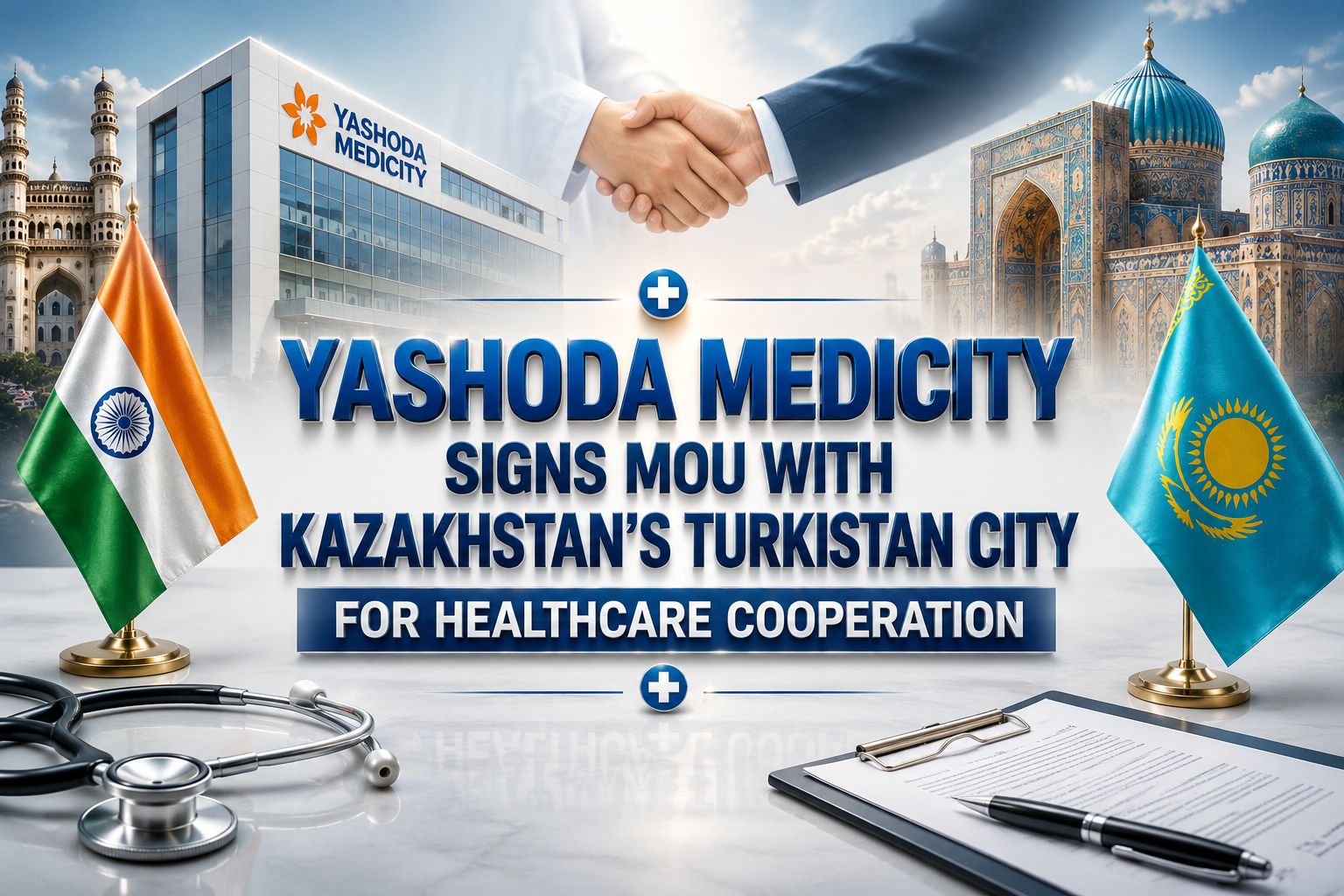
In a significant step towards strengthening international healthcare collaboration, Yashoda Medicity has signed a three-year Memorandum of Understanding (MoU) with Turkistan City in the Republic of Kazakhstan. The partnership aims to improve access to specialised medical treatment, promote professional healthcare training, and establish stronger channels for cross-border clinical cooperation.
The agreement reflects the growing importance of international partnerships in improving healthcare access and enabling patients to receive advanced treatment beyond their home countries.
Expanding Access to Specialised Medical Care
One of the key objectives of the collaboration is to create a structured pathway for patients from Turkistan who require advanced and complex medical treatment.
Through the partnership, eligible patients may gain access to specialised tertiary and quaternary healthcare services at Yashoda Medicity. The collaboration is expected to support patient referrals and facilitate smoother coordination for individuals seeking treatment in India.
The specialised medical services covered under the cooperation include areas such as:
Cancer care
Cardiac sciences
Neurosciences
Gastroenterology
Liver sciences
Robotic surgery
Minimal access surgery
Nephrology
Renal transplantation
Urology
Critical care
This broader access to specialised services could help patients requiring complex treatment receive expert medical care and advanced clinical support.
Focus on Telemedicine and Clinical Consultations
The MoU also highlights the growing role of digital healthcare in international medical cooperation.
Patients and healthcare professionals may benefit from services such as second medical opinions, tele-consultations and treatment planning. These services can allow medical experts to provide clinical guidance and support before patients travel for treatment.
The collaboration may also assist in coordinating appointments, hospital admissions and other aspects of the patient journey. Where applicable and in accordance with relevant regulations, support related to travel and visa coordination may also be facilitated.
To ensure smoother communication and coordination, Yashoda Medicity will appoint a Nodal Officer for the partnership.
Strengthening Medical Education and Professional Training
Beyond patient care, the agreement places significant emphasis on the development of healthcare professionals.
Doctors, nurses and paramedical professionals from Turkistan may have opportunities to participate in various educational and professional development programmes, including:
Short-term training programmes
Long-term training programmes
Clinical observerships
Fellowship opportunities
The initiative is expected to promote knowledge exchange and provide healthcare professionals with exposure to advanced clinical practices and healthcare systems.
Training and knowledge-sharing may also cover important areas such as hospital management, healthcare quality systems and clinical practices.
Advanced Healthcare Technology to Support Collaboration
Modern healthcare increasingly depends on advanced technology, and Yashoda Medicity's medical infrastructure is expected to support several areas of the partnership.
The facility includes technologies and systems such as:
Robotic surgery
Advanced medical imaging
Radiation oncology technology
AI-enabled E-ICU Command Centre
The AI-enabled E-ICU system can support real-time patient monitoring and remote clinical oversight, which may further strengthen the role of digital healthcare and remote consultations in cross-border medical cooperation.
Supporting a Smooth Patient Referral System
The Turkistan Health Care Department will play an important role in supporting the implementation of the agreement.
Its responsibilities are expected to include facilitating patient referrals, coordinating with the relevant healthcare institutions and nominating healthcare professionals for training programmes.
Yashoda Medicity, meanwhile, will provide preferential facilitation for patients referred through the appropriate channels, subject to the availability of medical services and facilities.
Such structured coordination can help reduce barriers that international patients often face while seeking specialised treatment abroad.
Emphasis on Patient Safety and Medical Ethics
The collaboration also recognises the importance of maintaining high standards of patient safety, privacy and ethical medical practice.
The participating institutions are expected to follow applicable requirements related to:
Patient confidentiality
Data protection
Medical ethics
Privacy standards
These measures are particularly important in international healthcare collaborations, where patient information and medical consultations may involve coordination across different countries and healthcare systems.
Strengthening India–Central Asia Healthcare Relations
The MoU represents a broader trend of increasing healthcare cooperation between India and Central Asian countries.
India has emerged as an important destination for specialised medical treatment, supported by advanced hospitals, experienced healthcare professionals and a growing ecosystem for international patient services.
Partnerships such as this can contribute to the development of stronger connections in areas including:
Specialised healthcare access
Cross-border patient referrals
Medical Value Travel
Telemedicine
Healthcare professional training
Knowledge and technology exchange
Healthcare and medical tourism have also been identified as important areas for deeper cooperation between India and Central Asian nations.
Conclusion
The three-year partnership between Yashoda Medicity and Turkistan City marks an important development in international healthcare cooperation between India and Kazakhstan.
By combining patient referrals, specialised treatment, telemedicine, professional training and knowledge exchange, the collaboration aims to create a more connected healthcare ecosystem between the two regions.
As cross-border healthcare continues to evolve, such partnerships could play an increasingly important role in improving access to advanced medical services while also supporting the professional development of healthcare workers and strengthening international medical cooperation.