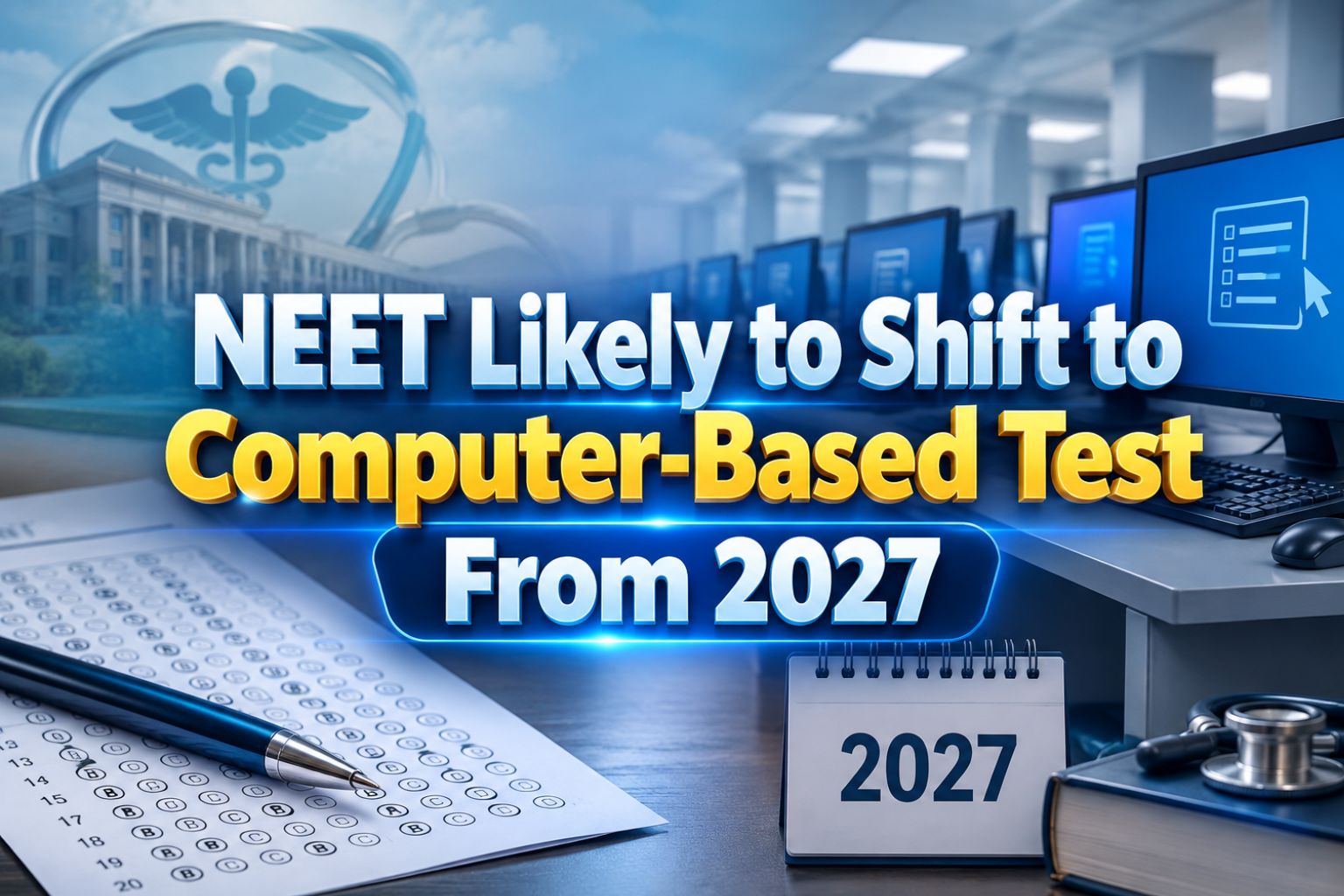
New Delhi: The National Eligibility cum Entrance Test-Undergraduate (NEET-UG) is likely to move from the existing pen-and-paper format to a Computer-Based Test (CBT) system from 2027, marking a major change in the country's largest medical entrance examination.
National Testing Agency (NTA) Director General Abhishek Singh has indicated that the agency is moving towards conducting NEET in CBT mode “very soon.” The proposed transition comes amid ongoing efforts to strengthen examination security, transparency and technology-driven monitoring.
NEET CBT Transition Under Consideration
The Centre has proposed shifting NEET-UG to computer-based testing from 2027. However, the final decision is linked to the recommendations of a High-Powered Task Force chaired by Nandan Nilekani, along with consultations with stakeholders.
The move follows concerns surrounding the conduct and security of large-scale pen-and-paper examinations, particularly after the controversy surrounding NEET-UG 2026.
According to the NTA DG, several major examinations, including JEE, UGC-NET, CUET and NIFT, are already being conducted through CBT, indicating the agency's broader move towards digital examinations.
Large Infrastructure Expansion Needed
Moving NEET to CBT would be a major logistical exercise because of the examination's enormous candidate base. The NTA will need a large network of secure computer-equipped examination centres capable of accommodating millions of medical aspirants.
To prepare for the proposed transition, NTA has partnered with the All India Council for Technical Education (AICTE) to map available IT infrastructure in government institutions across the country that could potentially be used as examination centres.
AI, Biometrics to Strengthen Exam Security
Technology is also expected to play a larger role in preventing malpractice. NTA is exploring the use of Artificial Intelligence (AI), data analytics and examination logs to identify irregularities and strengthen monitoring mechanisms.
The agency is already using Aadhaar-based verification and facial authentication across several examinations. According to the NTA DG, these systems could help strengthen candidate identification and reduce impersonation and other forms of examination fraud.
The proposed digital examination system is therefore expected to combine CBT infrastructure with biometric authentication, AI-based monitoring and data-driven security measures.
NEET-UG 2026 Controversy Behind Proposed Reforms
The proposed shift comes against the backdrop of the controversy surrounding NEET-UG 2026, which was initially conducted in pen-and-paper mode on May 3.
More than 22.7 lakh candidates appeared for the examination across 551 cities in India and 14 international cities, covering more than 5,400 examination centres.
The examination was subsequently cancelled on May 12, 2026, with NTA announcing a re-examination on June 21.
The decision followed an investigation by the Rajasthan Police Special Operations Group (SOG) into allegations involving a “guess paper” containing questions similar to those asked in NEET-UG. The matter was later referred to the Central Bureau of Investigation (CBI) for investigation.
The controversy further intensified discussions around examination security and the need for stronger systems to prevent question-paper leaks and other forms of malpractice.
NTA Looking Beyond Domestic Exams
The NTA leadership has also indicated that the agency could eventually explore conducting cross-border examinations. However, the immediate priority remains strengthening India's domestic examination system and ensuring that large-scale tests are conducted fairly, securely and transparently.
If implemented, the NEET-UG CBT transition would represent one of the biggest technological changes in the country's medical admission process. For millions of medical aspirants, the proposed 2027 shift could mean preparing not only academically but also becoming familiar with a completely different examination interface and testing environment.
For now, the 2027 CBT transition remains a proposed reform, with the final decision expected after the task force's recommendations and consultations with relevant stakeholders.